

The High Vacancy Rate of Real Estate in Japan and Brazil
Although Brazil and Japan are two countries with very different economic and social realities, they both have unusually high rates of vacant real estate, far exceeding the global average. What accounts for this similarity? Can we compare the real estate markets of these two countries based solely on these rates? Definitely not! A more in-depth analysis shows that the causes of these unusually high rates differ significantly from one country to the other.
When referring to vacant properties, we do not include vacation homes or properties used only occasionally. Among the vacant properties are those held for real estate speculation, those awaiting an increase in value before being placed on the market for sale or rent; properties whose occupancy is prevented by legal disputes, such as divorces, disputes among heirs, and unresolved probate matters; and vacant properties in deteriorated urban areas.
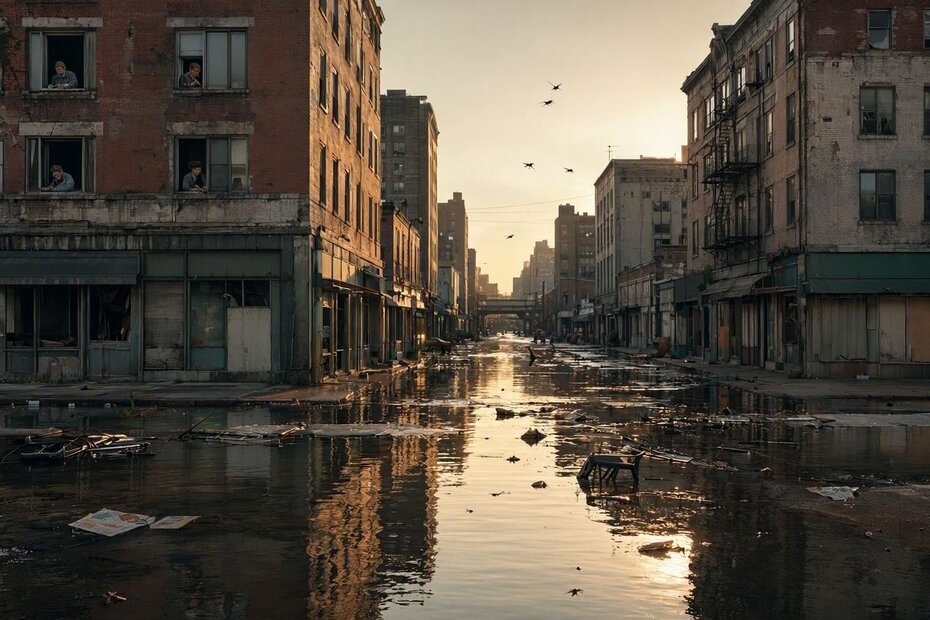
Generated by Bing Image Creator
In Japan, 13.8% of the total number of dwellings are completely vacant, with more than 40% of these properties in a state of complete abandonment and varying degrees of disrepair. The situation is expected to worsen significantly in the coming years, given the dramatic aging of the population.
The current proportion of elderly people (>65 years old) in the Japanese population is nearly 30%, and it has been rising sharply due to the low birth rate. As they age, the elderly leave their homes to live with family members or in nursing homes. These abandoned homes become a problem for their heirs, who cannot sell or demolish them because of the presence of ancestral altars, nor can they take ownership of them due to exorbitant inheritance taxes.
Another factor contributing to the high vacancy rate is the Japanese preference for purchasing new homes rather than renovating their old ones. This is due to frequent structural problems caused by earthquakes, the poor quality of construction in the period following the end of World War II, and the fact that the government levies lower taxes on mortgaged properties than on properties that have already been paid off.
Finally, the depopulation of Japan’s rural towns accelerated in the postwar period, when young people migrated from villages to large urban centers in search of work. This is the case in Nagoro, where the 30 remaining residents decided to place life-size dolls on their porches to make the town appear less abandoned.
But what about Brazil? What accounts for the high vacancy rate?
Among Brazilian state capitals, Porto Alegre has the highest rate. The 2022 IBGE census shows a rate of 14.7%, indicating a sharp increase since the previous census (2010: 9.4%). Next are Vitória (14.1%), Rio de Janeiro (13.1%), Salvador (12.4%), and São Paulo (11.8%). In all these cities, vacancy is due to a combination of factors: population decline in the state capitals and a construction boom.
In the capital of Rio Grande do Sul, the vacancy rate is particularly high in the Historic Center, with up to 30% of units vacant in certain census sectors. This is due to the gradual abandonment of the city center as commercial activity has migrated to the neighborhoods, the growing economic crisis that has engulfed Brazil in recent decades, the expansion of remote work, and a public safety crisis. All these factors could be mitigated through the adoption of appropriate public policies; however, public authorities have been rather timid in their search for solutions. Consequently, a region with an extensive sewer system, public transportation, and well-established commerce—such as the Historic Center—is gradually being left to rot.
There has also been a significant population exodus from the northern, southern, and far southern areas of Porto Alegre, as well as from the Arquipélago region, due to the 2024 flood. Several of these regions had already been experiencing urban depopulation and degradation. But with the onset of the flood, the phenomenon accelerated. A two-speed real estate market emerged in the capital of Rio Grande do Sul: flooded areas lost value and liquidity, while dry areas saw an increase in value of up to 25% in the twelve months following the flood.
In addition to the reasons mentioned above for the high vacancy rate, there is a significant mismatch between real estate development and occupancy, unlike what occurs in other Brazilian state capitals. Although Porto Alegre’s population has declined, there has been strong real estate expansion, with a large supply of high-rise, expensive properties that do not perfectly match demographic needs: apartments are being built in areas with lower population density, and their prices are excessively high.
A simple comparison of property vacancy rates across various cities around the globe yields analyses of little significance, as one must take into account the specific characteristics of each city to better understand what is happening in the local real estate market. Although similar rates are observed in Japan and in Brazilian state capitals, these rates result from very different processes, as we have seen previously.
The problems currently faced by Porto Alegre should serve as a warning to government officials in other Brazilian cities, as they clearly illustrate the economic and urban impact of catastrophic events resulting from climate change. In order to reduce the impact of global climate change, the government must work diligently to establish public policies aligned with local housing needs. Outsourcing these decisions to the construction industry has resulted in inefficient solutions, as the real estate market is increasingly geared toward the elite.
translated to english by DeepL.com
Voltar