

Luxury Brands and the Prestige Market
Reflections on the Designer Goods Market and the Never-Ending Pursuit of Status
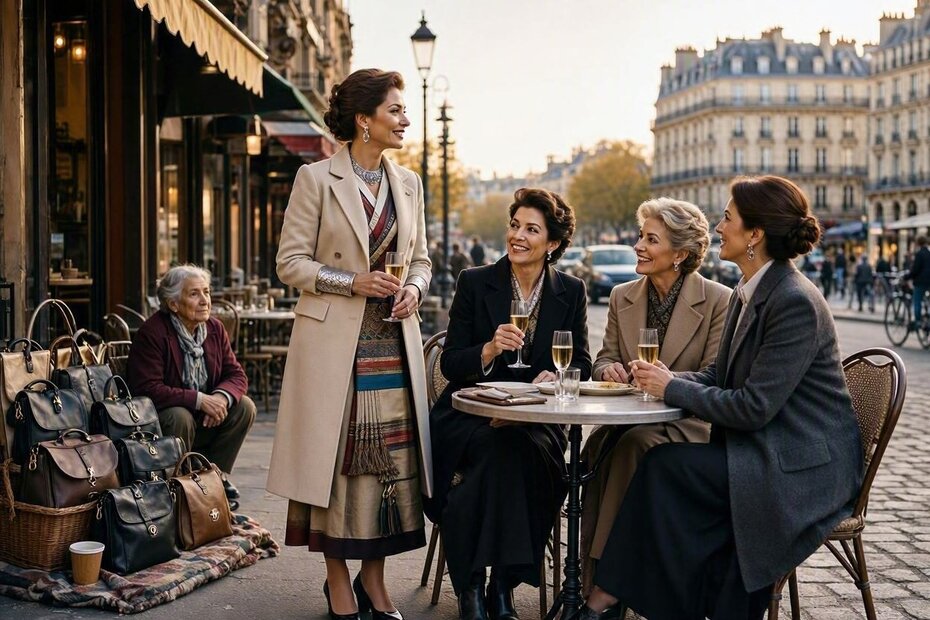
Illustration by Bing Image Creator
Although the human quest for social distinction is a phenomenon whose origins are lost in time, the consumption of luxury brands has become the modern passport to validation—the unquestionable sign that a person belongs to a privileged class.
The consumption of luxury brands is not a recent phenomenon, and its success has been so remarkable that it subverts the most well-known rules of economics. Who isn’t familiar with the Law of Supply and Demand? Considered the economic principle that governs the prices of goods and services, it states that the higher the price of a product, the lower the demand for it. On the other hand, if the price falls, more people tend to want to buy it. This, however, does not apply to the high-end market.
As consumption data from this market over the past few decades show, luxury brands continue to thrive despite product prices consistently rising faster than inflation. An analysis of prices shows that prices rise regardless of improvements in product quality or technological innovations. This seems to indicate that the more expensive designer products become, the higher the consumer’s status. Well, at least that was the case until 2025. Since then, things have changed a bit.
Luxury brands such as Louis Vuitton, Dior, Gucci, and Chanel have faced a deep crisis over the past two years, seeing their economic growth curves plummet. The exorbitant prices charged for their products in recent years have led their customers to abandon the brand and migrate to the jewelry and high-end fragrance markets.
Although there is a tendency to assume that the crisis is due solely to price hikes and an international recession, the reality seems to be far more complicated, involving issues as diverse as cultural trends and the quality of the workforce.
The ultra-luxury market was historically produced by skilled labor in small, family-run European workshops. However, with the transition from an artisanal model to corporate conglomerates geared toward an international market, the workforce’s skills were lost. As European industries migrated to the East, it became possible to generate higher profits and mass-produce what was once exclusive. However, industrial products began to suffer a decline in quality, no longer justifying the exorbitant prices charged until then.
Furthermore, a significant portion of the current consumer market for luxury brands is located in China. However, the economic slowdown observed in the East in recent years has eroded the purchasing power of the Chinese upper-middle class, leading to the end of the Luxury Supercycle. Compounding this, the Chinese government has launched social media campaigns to curb consumerist habits and the excessive glorification of Western luxury brands in favor of traditional communist values. Part of the luxury market that remains in China has turned to local, more affordable brands.
Finally, as Generation Z has come of age and entered the consumer market in large numbers, new values have replaced pre-existing consumerist trends. With the current success of second-hand stores and the growing consumption of pre-owned luxury items, prices have dropped considerably, making these products more accessible to everyone striving for a sustainable economy. Furthermore, the ostentatious display of logos has become commonplace, and younger people have shifted toward a more discreet, high-quality, and minimalist style, free of flashy logos.
Because of all these changes, the luxury market is having to reinvent itself. Brands that were once successful selling designer goods are now investing in offering intangible experiences—what is known as “Experiential Luxury.” True social distinction can no longer be easily purchased from a store window.
The new status symbol is now silent and inaccessible. Experiences are not offered to everyone with money, but rather to those with time, cultural sophistication, and access. The current paradigm involves collecting memories, experiencing “Silent Luxury,” and conducting oneself with the dignity typical of “Old Money” families. The pursuit of privilege has shifted from the possession of objects to the accumulation of experiences, transforming memory into the scarcest of consumer goods.
Ultimately, the luxury market evolves because the human quest for belonging is an endless cycle. The constant need to flaunt one’s place in the privileged class reveals the profound insecurity of our condition. For this mechanism to survive, status symbols must constantly change, ensuring that access remains exclusive to a minority.
Translated to english by DeepL
Voltar