

Shall We Discuss the Data?
With two weeks to go before the second round of Brazil’s presidential election, and with the race virtually tied between the incumbent’s candidate (Lula—PT) and the opposition candidate (Flavio Bolsonaro—PL), the disputes between the two parties are largely based on hearsay and fake news. How about we take a look at the available data on the performance of the Jair Bolsonaro administration and the Lula administration, as well as the campaign proposals of Lula and Flavio Bolsonaro?
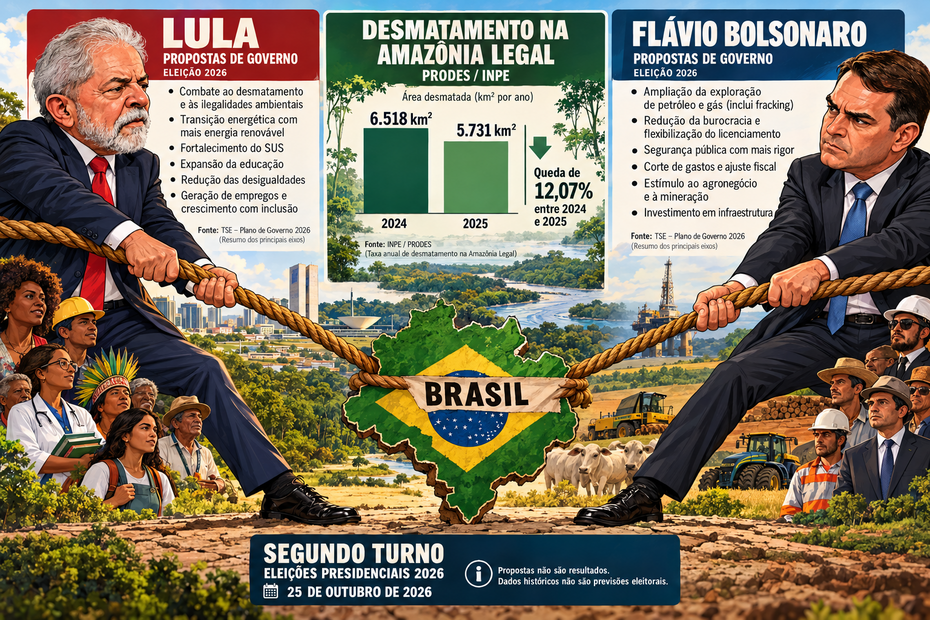
(Image by chatGPT)
I’m not a fan of the PT or President Lula. Far from it. I was appalled by the fiscal maneuvers and the revelations about the PT’s involvement in the shady dealings uncovered at two of Brazil’s largest companies—Vale and Petrobras—in the case that led to Dilma’s impeachment in 2016. Ten years later, having gone through Lula’s imprisonment and his reelection following Bolsonaro’s tumultuous administration, we are on the verge of electing yet another candidate whose conduct is highly questionable.
The strong suspicions surrounding Flávio Bolsonaro’s ties to paramilitary groups; the evidence of money laundering, passive corruption, and currency evasion in the Dark Horse and Banco Master cases; the widely publicized “rachadinhas” scheme at Alerj; the unjustified growth of his real estate holdings and the astronomical profits earned by his Kopenhagen store franchise—none of this seems to shock his voters. But wasn’t the revolt of Flávio Bolsonaro’s voters against the current government precisely directed at the crimes that led to Lula’s conviction?
Who am I to demand consistency from others, when I myself am a person full of flaws? But the inconsistency in the current campaign is so stark that it’s impossible to understand those voters who wave the national flag as a symbol of their support for Flávio. How can anyone use the greatest symbol of nationalism—the national flag—while openly advocating for the U.S. president’s intervention in their country’s sovereignty?
Based on voters’ statements, I understand that the current state of the country’s economy, the difficulties faced by agribusiness, and public safety are the main sources of opposition to the PT remaining in power. If the core of the problem were President Lula’s integrity, Flávio’s candidacy would not even have been considered for this election. But when one compares the macroeconomic indicators from Paulo Guedes’s tenure in Jair Bolsonaro’s administration with those of the current administration (see table below), the results are insufficient to explain such intense anger on the part of the middle class against the Lula administration.
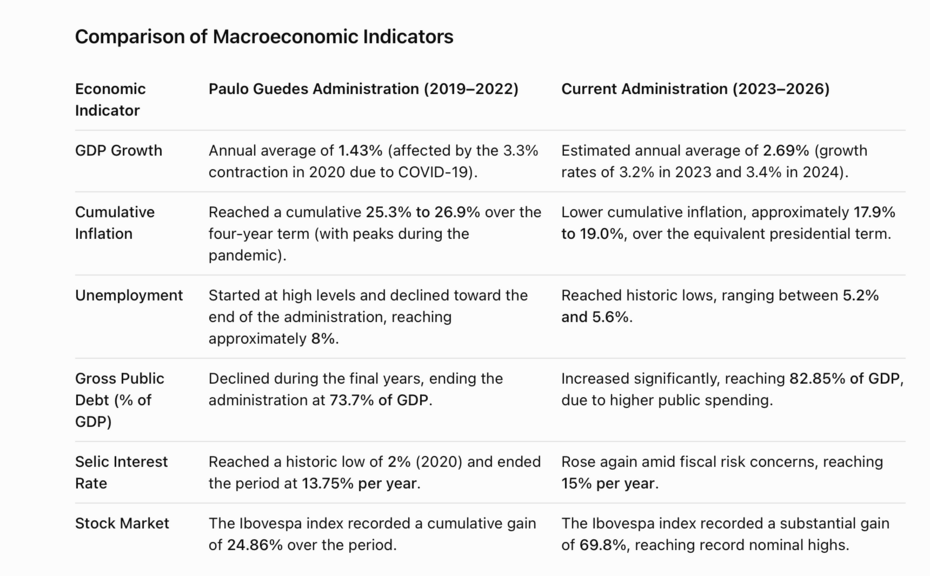
(Source: Google)
With regard to agribusiness, it is also difficult to pinpoint the cause of farmers’ current immense discontent with the government (see table below):
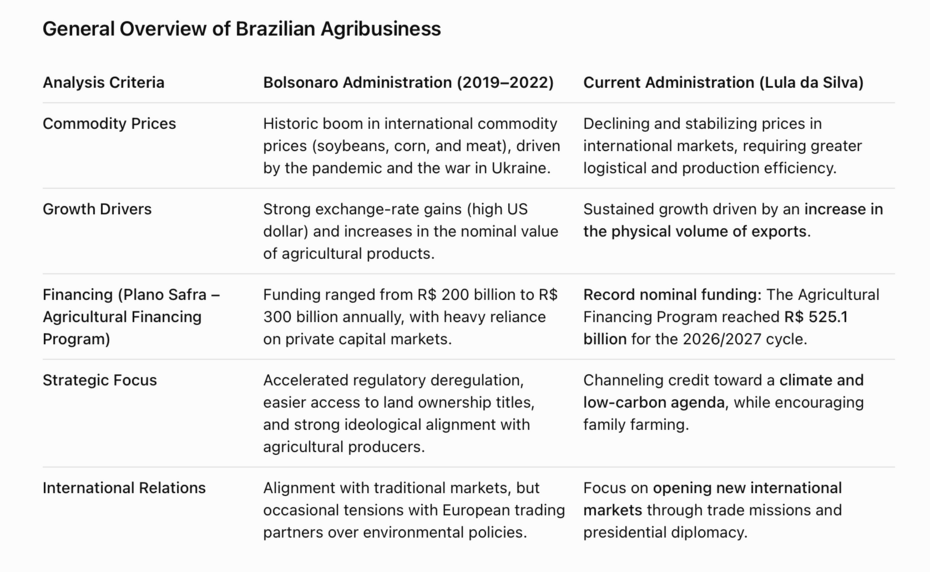
(Source: Google)
The major difference appears to lie in the imposition and collection of environmental fines against rural landowners (see table below). During the transition from the Jair Bolsonaro administration (2019–2022) to the current administration, fine collection skyrocketed as inspections intensified. In 2024 alone, IBAMA collected R$ 729 million, which exceeds the total collected during the four years of the Jair Bolsonaro administration. But tell me, are you also part of the crowd that believes environmental preservation and climate change are just fairy tales? Don’t come complaining later about the droughts and deluge-scale floods that will disrupt your peace, your property, your health, and the survival of your loved ones.
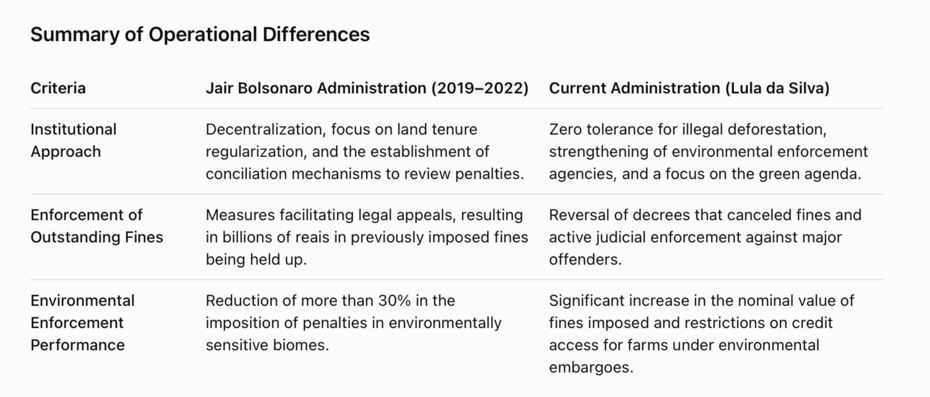
(Source: Google)
In fact, it is in environmental protection that some of the biggest differences between the PT’s proposals and those of right-wing parties can be seen.
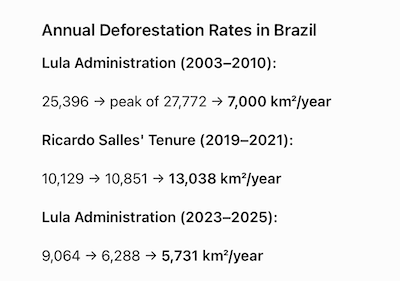
The PT has historically shown more positive results in the fight against Amazon deforestation (see table below) than those observed during the Jair Bolsonaro administration. During Lula’s first two terms, Amazon deforestation fell by about 72% between the first and last years; during the Salles administration, there was a sharp increase; and, since Lula’s return, the rate has fallen again, reaching approximately half the 2022 level by 2025.
(Source: ChatGPT)
Regarding the climate issue, which has a strong influence on the results achieved by agribusiness, the current PL candidate does not structure his platform around this issue, does not set carbon emission reduction targets, does not call for a reduction in fossil fuel production, proposes the inclusion of fracking as a method of oil extraction (a method linked to serious environmental problems, earthquakes, and high costs), and proposes a significant relaxation of environmental licensing through the creation of self-licensing.
Self-licensing? Is this some kind of bad joke?
Finally, let’s talk about public safety. How can a candidate claim to combat crime when there is strong suspicion that he has ties to the militia and to Vorcaro—and, therefore, to the PCC brazilian criminal faction, as suggested by Federal Police investigations? And if the Bolsa Família program is scaled back, what will we do to ensure that the legions of people who go hungry and live below the poverty line don’t end up joining the criminals who are ravaging Brazilian cities?
In short, there is still time for you to reflect on your choice for president. The second round of Brazil’s presidential election will be held on Sunday, October 25. Until then, think long and hard—and hope for humanity’s common sense to prevail.